Skip to content
  • Skip to primary navigation
  • Skip to main content
Stern Center for Language and Learning logo

Stern Center for Language and Learning

Life-changing learning for all

  • Client Login
  • Careers
  • Contact
  • Donate
  • For Learners and Families
        • Tutoring Services
          • Reading, Writing, and Math Tutoring
          • Learning Disability Support
          • Adult Learners
          • Summer Learning
        • Social Emotional Learning
          • Speech Therapy
          • Social Thinking
          • Autism Services
          • Social Learning Summer Programs
        • Evaluations
        • Reading Readiness Check-Up
        • Student Stories
        • Financial Assistance
        • Academic Calendar
        • News & Resources
  • For Teachers
        • Courses & Workshops for Teachers
          • Structured Literacy Coaching for Teachers
          • Orton-Gillingham Training
          • Wilson Language Training®
          • Social-Emotional Learning Courses
          • Assessment and Evaluation Courses
          • MindPlay Comprehensive Reading Course
        • Hoehl Institute for Professional Learning
          • Reducing Costs for Teachers
          • Teacher Impact Stories
          • Resources & Newsletter
  • For Schools
        • Programs and Support for Schools and Districts
          • Structured Literacy Training and Coaching
          • Orton-Gillingham for Schools
          • Wilson® Reading Programs
          • Social-Emotional Learning for Schools
          • Reducing Costs for Professional Development
          • School Impact Stories
  • About Us
        • About
          • Our Team
          • Board of Directors
          • News & Annual Reports
          • Careers
          • Contact Us
        • Ways to Give

Get Your Library Card Now!

May 30, 2017

A 2016 study reveals that book readers live longer than non-book readers (Bavishi, Slade, Levy; PubMed.gov of the US National Library of Medicine, National Institutes of Health)!

“After adjusting for relevant covariates including age, sex, race, education, comorbidities, self-rated health, wealth, marital status, and depression,” the study found that “book reading contributed to a survival advantage that was significantly greater than that observed for reading newspapers or magazines.”

Specifically, “book readers experienced a 20% reduction in risk of mortality over the 12 years of follow-up compared to non-book readers.”

This is certainly great news for those of us already hooked on books, but should also be a strong incentive for everyone to adopt this most accessible of habits, recreation, and entertainment. Book reading is non-invasive, cost-free, and subject to no limitations other than our own appetites, interests, and time. Unless you cannot read with sufficient aptitude to make it at least accessible, if not pleasurable.

That’s where the fundamental social challenge of literacy for all comes in. The case for fostering, even guaranteeing, literacy has generally been rooted in data around employment, career potential and earnings, and participation as a citizen. For example, previous studies have shown that readers achieve more in academic settings, gain more meaningful employment, earn higher salaries, vote more, volunteer more, and exhibit great empathy than do non-readers. But with this study the case becomes even more basic: We live longer.

So now, those of us who are parents, educators, and invested citizens see an even better incentive to ensure our fellow travelers are literate. That requires more than getting our kids their own library cards, Kindle accounts, and personal libraries at home. It means working to inform policy makers, budget crunchers, and educators across the board about what it takes to ensure everyone reads.

As Mark Seidenberg demands in his recent book Language at the Speed of Sight, the science about how to teach reading exists; it’s well overdue that we all pay attention and apply that science. The reading wars should be confined to the history books, something for us to nod knowingly at but dismiss as unfortunate parochialism relegated to our professional past. Let us move on, applying the science which compels our use of what Seidenberg calls the “eternal triangle” of reading: semantics, orthography, and phonology.

One adage recognized by elementary school teachers is that, “You learn to read, then you read to learn.” This new study suggests an added dimension, you read to live longer!


[instructor id=”2436″]

Filed Under: Reading Support

For Learners
  • Tutoring Services
  • Evaluations
  • Social Learning & Speech Therapy
For Teachers
  • Courses & Workshops
  • Structured Literacy Coaching & Teacher
  • Orton-Gillingham Training
  • Wilson Language Training®
  • Newsletter
For Schools
  • Structured Literacy Coaching & Teachers
  • Orton-Gillingham for Schools
  • School Support
About Us
  • Mission & Values
  • News & Resources
  • Giving
  • Careers
  • Contact Us
  • Media Center
  • Privacy Policy
Connect with Us
  • Facebook
  • Twitter
  • Instagram
  • LinkedIn
  • PL Newsletter
Hearts Icon

This website is made possible thanks to
the generous support of Deborah Schapiro & Louis Polish and Margie L. & Peter Stern

Stern Center

Because all great minds don’t think alike.

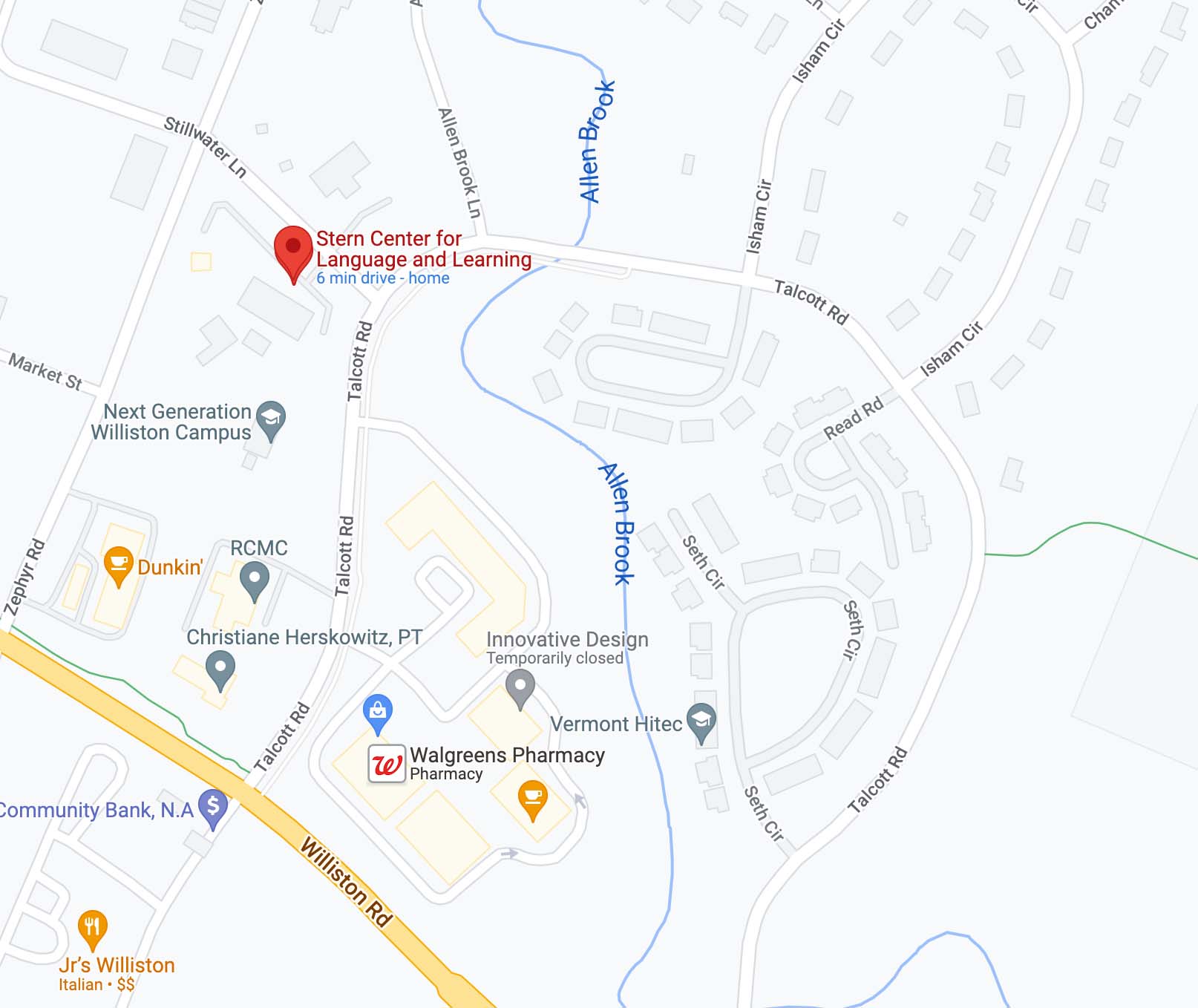
Map of Stern Stern Center for Language and Learning
Click to enlarge

Stern Center for Language and Learning

183 Talcott Rd #101
Williston, VT 05495
Phone: 802-878-2332
Fax: 802-878-0230
EIN:  222485793

  • Facebook
  • Instagram
  • LinkedIn
Contact Us

Copyright © 2026 Stern Center for Language and Learning
Website by Stride Creative Group