For Teachers
Reading, Writing, and Spelling Courses
What is Structured Literacy?
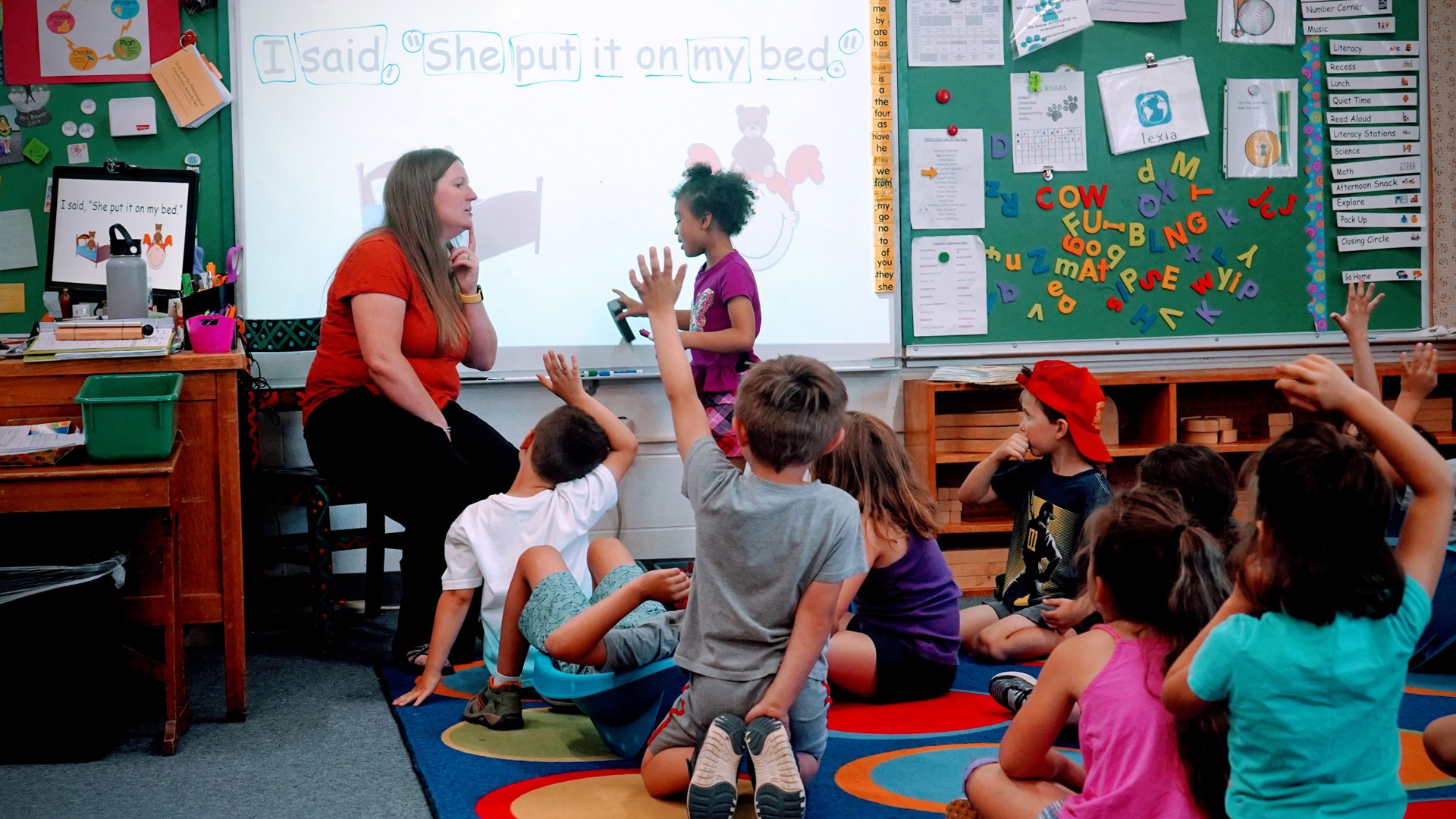
Educators who use a structured literacy approach teach students to read by connecting sounds to letters, then progressing to more complex words and texts, building skills deliberately, systematically, and sequentially, and in ways customizable to each student’s needs. Key elements include oral language development, phonemic awareness, phonics, vocabulary, spelling and morphology, fluency, syntax, reading comprehension, and writing.
These dimensions of reading success are supported by decades of neuroscientific research on how our brains learn to read and write—and by teachers, who consistently say that structured literacy is a game-changer for helping struggling readers.

The Science of Reading
The science of reading draws on decades of research in neuroscience, cognitive psychology, education, and linguistics that seeks to understand how children learn to read. The research shows that reading isn’t something we develop naturally by being exposed to books and text. Instead, it requires explicit, systematic, and cumulative instruction that builds on prior learning. Being taught to notice, think about, and work with the sounds in words (phonemic awareness) and understand the structure of the English language (syllable types, spelling patterns and the meaningful parts of words) creates a foundation for reading success.

Structured Literacy Approach
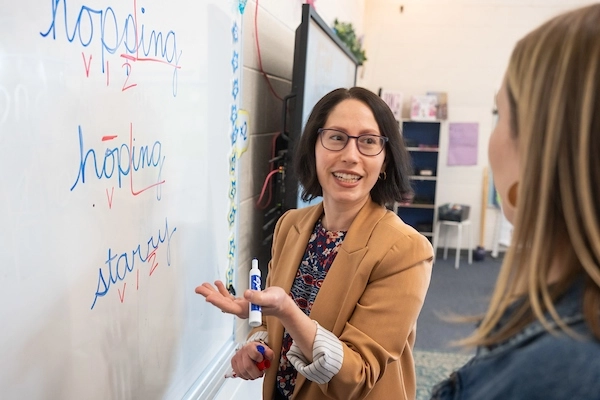
With structured literacy, children aren’t expected to infer or guess at something they’ve never been explicitly taught how to do. Teachers take a direct, step-by-step approach, helping their students learn foundational skills, practice each one, and move on to the next concept when the data show they’ve mastered earlier skills. The approach prioritizes strong decoding abilities and engages learners in multisensory ways, reinforcing new learning and building neurological pathways that strengthen the reading brain. With decoding and fluency as a solid early foundation, student readers can learn, build knowledge, and flourish.
Why Coaching?
Choosing coaching is a powerful step toward professional growth and improved student outcomes. Coaching offers educators and administrators the space, time, and opportunity to refine existing strengths and gain new knowledge and skills. Our literacy coaches are collaborative partners who provide encouragement, constructive feedback, and practical tools to support instructional goals. It is a dynamic, nonjudgmental, non-evaluative experience rooted in collaboration, continuous improvement, and shared commitment to student success. By choosing coaching, participants will join a supportive, goal-oriented partnership that honors their expertise and empowers them to grow with clarity and confidence.
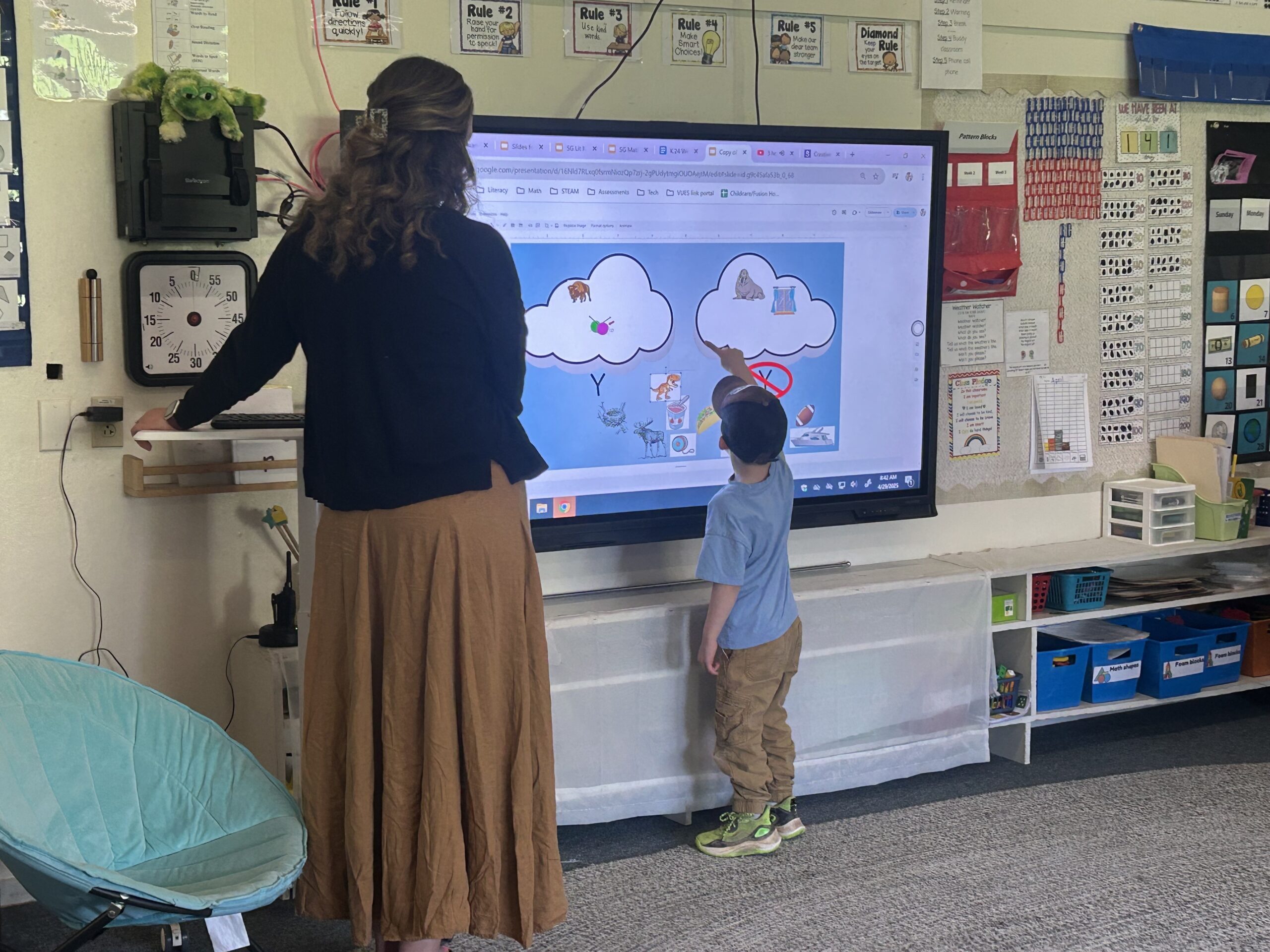
“The most fulfilling thing for me about teaching is giving students the tools they need to create their own path. That’s one of the reasons why I find teaching reading particularly fulfilling—because literacy is power. And I feel like when I teach children to read that I’m giving them the power to choose who they want to be.”
Hilary Paquet, Special Educator, East Montpelier Elementary School

Components of Structured Literacy
A groundbreaking report in 2000 by the National Reading Panel summarized decades of research by outlining the essential elements of effective reading instruction and practice. Since that time, scientific consensus has shown what it takes to teach students how to read, what factors impede reading development, and which components provide the most benefit.
Phonemic Awareness
Phonemic awareness is the ability to hear, identify, and manipulate the individual sounds in spoken words.
Morphological Awareness
Morphological awareness is the ability to understand and perceive the parts of words in language, such as roots, base words, prefixes and suffixes, and parts of speech.
Background Knowledge
Background knowledge is the knowledge that a reader brings to the text, such as prior learning about history, science, literature, art, and the world. It is essential for reading comprehension.
Writing
Writing is a challenging process that requires legible, automatic letter formation, accurate spelling, a strong vocabulary, an understanding of text, and higher-order processing. It helps us to organize our thoughts, solidify our understanding, and communicate with others.
Phonics
Phonics gives us an understanding of the alphabetic principle—the relationship between sounds and letters. Students need to master sound-symbol associations, including the blending of sounds and letters into words and breaking down whole words into their individual sounds.
Vocabulary
Vocabulary is knowing the meanings of words and how to pronounce them properly.
Fluency
Fluency is the ability to read text accurately—at a rate that promotes meaning—and with proper expression.
Comprehension
Reading comprehension is the ability to read text and understand its meaning. Comprehension includes decoding, language comprehension, inference, and synthesis, and depends on strengthening vocabulary and building background knowledge.
What the Research Has to Say
The Reading Crisis Affects…
Science of Reading Training

Interactive Science of Reading Courses
Build your knowledge of the Science of Reading with our Building the Foundations and Advanced Structured Literacy courses! Whether helping support students acquire foundational skills or deepening their comprehension, fluency, and meaning-making skills, these self-paced courses provide research-based strategies, interactive practice, and personalized coaching to help educators confidently support every learner, from early readers to adolescents.
Orton-Gillingham Training
Help every child have access to reading with this powerful, multisensory approach to teaching reading, writing, and spelling. The underlying foundation of all structured literacy instruction, the Orton-Gillingham Approach will benefit all readers, including individuals with dyslexia.

Wilson Language Training®
Used in schools nationwide, Wilson Reading Programs teach students how to read and write using an explicit, systematic, structured, and multisensory approach. The Stern Center is a Wilson® Accredited Training Partner and proud provider of high-quality online training in Fundations®, Just Words®, and the Wilson Reading System®.

Reading and Writing and Assessment
For students with reading and writing challenges, effective instruction and intervention hinges on accurate, well-designed assessment. Learn from expert educational evaluators about identifying and optimizing students’ learning profiles and linking assessment to instruction.


Supporting Teachers
Supporting Teachers and Professional Learning
The Cynthia K. Hoehl Institute for Excellence reduces costs to support educators seeking to excel in their profession through our programs. Learn more about Cynthia K. Hoehl, whose vision as an educator inspired a powerful legacy.
Frequently Asked Questions
How do I register?
- If the course or workshop you’re interested in is on our website, please visit the course or workshop’s page and follow the link to access our online registration form. Complete the form by doing the following:
- Indicate whether you will pay with a credit card or a Purchase Order (PO).
- Fill out the participant information and workshop information sections.
- Read the Terms and Conditions and check the box to confirm your agreement.
- Click “Next”
- If you are paying with a PO:
- Please verify that your PO is complete.
- Upload the signed PO when prompted through the registration process. If you have questions please email: proflearning@sterncenter.org.
- Click “Next.”
- Your information will be sent to us to review. In 1–2 business days, we will confirm your registration by sending you an email with “Registration Confirmation” in the subject line.
- If you are paying with a credit card:
- Click “Continue.”
- On the Payment Method screen Click “Pay with Credit Card” to continue to Authorize.net.
- Enter your credit card information and click “Pay now” to complete your credit card transaction.
- Your information will be sent to us to review. In 1–2 business days, we will confirm your registration by sending you an email with “Registration Confirmation” in the subject line.
- If the course or workshop you’re interested in is not listed on our website, please contact us to learn more.
Is there research to prove the efficacy of Wilson Language Training® Programs?
Wilson Language Training programs, materials, and professional learning are proven effective in developing the reading skills of individuals with a language-based learning disability or who have otherwise struggled to learn to read. Read more at wilsonlanguage.com.
I’m considering taking a course for graduate credit. How long do I have to decide?
Graduate Credit Policy
Vermont State University (VtSU): If you are registering for a course that offers graduate credit from VTSU, you may add graduate credit up to and including the first day of class.
Graduate Credit Withdrawal Policy: For classes running consecutive days, participants who withdraw must decide by the end of the first day whether to request a graduate credit refund. To request a refund, email the Professional Learning Intake Coordinator at proflearning@sterncenter.org or by phone at 802-276-8684.
Can I audit a course or workshop?
Auditing our public offerings is not available. All attendees must register, pay tuition, and follow the attendance and participation policy.
How can I become certified in Orton-Gillingham?
The prerequisites to become certified in OG include earning a bachelor’s degree from an accredited institution and satisfactory completion of Associate-level requirements; 100 hours minimum of coursework by a Fellow, or by a Fellow in Training as designated by the Fellow; and 200 hours supervised practicum over two academic years minimum, which includes ten entire 4–60 minute lesson observations of the trainee by a Fellow on-site, unedited video or web-based applications.
What is the Orton-Gillingham Approach?
The Orton-Gillingham Approach is the underlying foundation of all multisensory, structured language instruction. Orton-Gillingham (OG) systematically teaches the structure of the English language by incorporating multisensory modalities in a structured yet flexible approach, ensuring student success. The Stern Center’s Orton-Gillingham Institute is the only organization in Vermont that provides OG training accredited by the Orton-Gillingham Academy. We offer coursework and practicum opportunities toward three certifications: OG Classroom Educator, OG Associate Level, and OG Certified Level.

Our Reach by the Numbers
4,660+
Teachers Served This Year
When a teacher takes one of our courses, the positive impact ripples beyond one life, spreading through an entire classroom, school, and community.

Our Reach by the Numbers
12,406+
Student Services Hours This Year
We offer one-on-one teaching that transforms lives, lifts up voices, and inspires learners to bring forth their unique gifts to a world that awaits them.

Our Reach by the Numbers
88%
of Vermont School Districts Served
We celebrate the dedication of our school partners and share their commitment to a brighter future for all learners.

Our Reach by the Numbers
35
States and Counting
We’re a national leader in language and literacy. Our impact currently extends across 35 states and outside the United States through the thousands of educators we reach and students we serve.
Keep Learning

Supporting Educators and FAQs
Ready to enroll in a course but have questions about how to register, credits, and more? Find your answers here!

Teachers Making Change
We celebrate the dedication of our fellow educators and share their commitment
to helping every learner grow and thrive.

Resources for Teachers
Explore evidence-based resources for teaching structured literacy, Orton-Gillingham, SEL, and more.

Get in Touch!
For questions about courses and workshops, email proflearning@sterncenter.org, call 802-878-2332, or fill out the form below.