
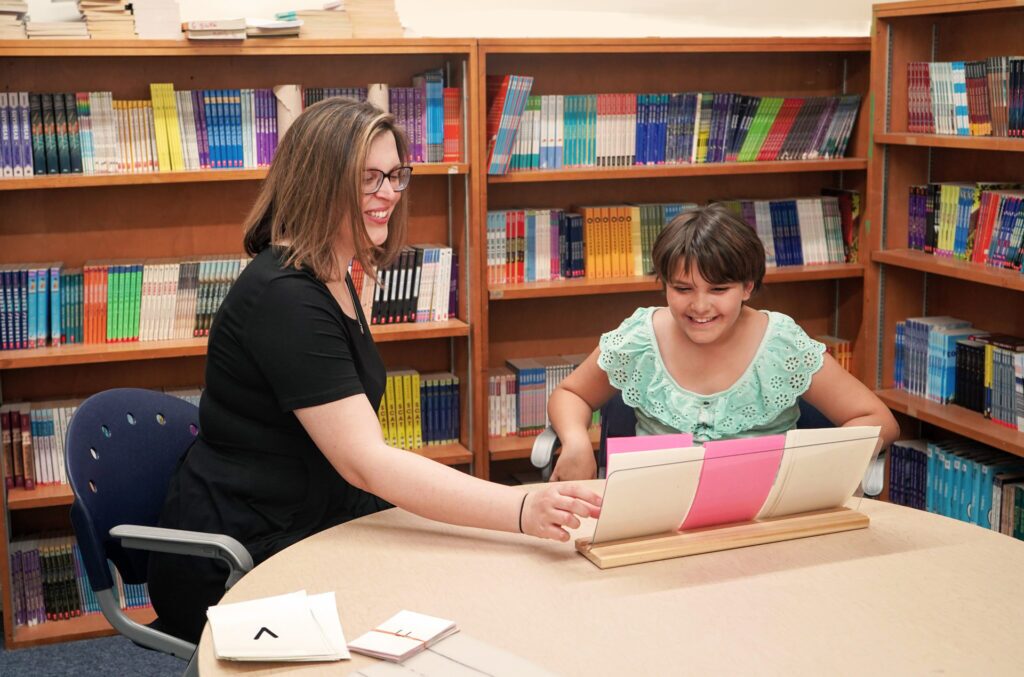
Unlike other skills, reading isn’t something our brains evolved to do easily. Instead, it is a complex skill we learn through direct instruction and deliberate practice.
Every child deserves the chance for the best possible future but without a structured approach to teaching reading, struggling readers will find many parts of school challenging and unrewarding. Some will act out, deflecting from their shame about reading difficulties. Some will drop out. Others will finish high school but don’t continue to college or advanced training that can provide greater opportunities. When adults aren’t proficient in reading, the chances for a stable career, a safe home, the chance to support a family, and access to medical care are all dramatically reduced.
This is why ensuring all children learn to read is so important. We need to start early, in kindergarten and first grade, and provide everyone with the support they need to succeed.
WAYS TO SUPPORT READING SUCCESS:

1. Play with sounds and words when you talk with your kids.
Have fun talking and singing with your kids! Do your best to encourage a steady stream of chatter: talking helps them develop oral language skills. Beginning when they’re babies and continuing through their teenage years, play with sounds in words. Clap out syllables. Rhyme! Think of words that begin or end with the same sounds. Before children learn phonics (connecting sounds with letters or groups of letters in written words), they must develop a foundational skill called phonological awareness, which means they can recognize and manipulate the sounds in spoken language.
If they’re older, chat with them about history, people, places, movies, music, and more. Don’t be afraid to use million-dollar words like “predator,” “collide,” and “apprehensive!” Be ready to reward their curiosity when a topic sparks their interest. You’ll build their background knowledge and develop a foundation for reading comprehension.
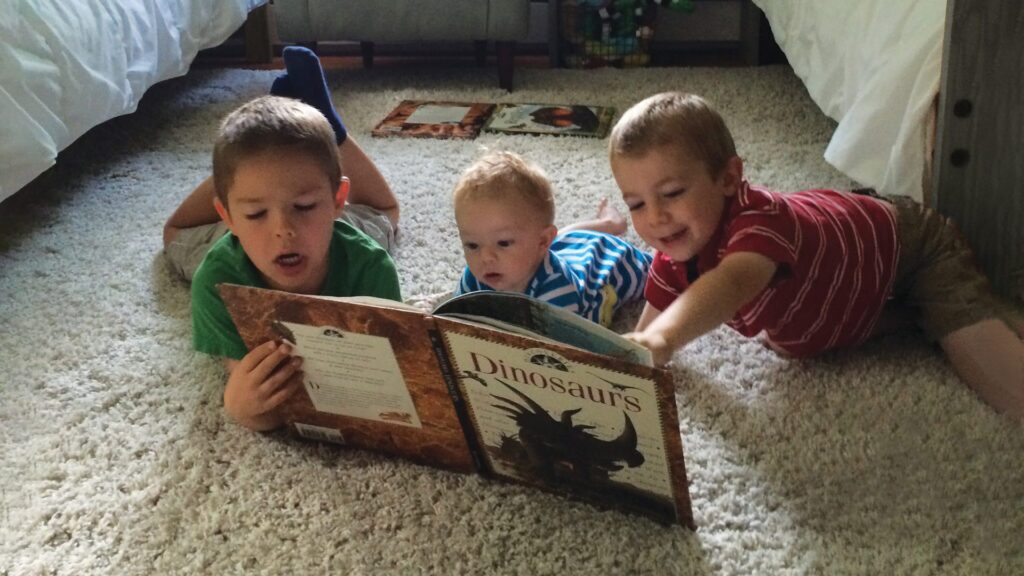
2. Read at home.
Reading and talking about books helps kids develop language, build listening comprehension, and learn about print. It’s also a great way to connect with your child, ensuring even a few minutes of special time for you both. Encourage them to read widely: magazines, comics, signs, notes, recipes, websites, and, of course, books! Let children choose whatever books they want at the library, but check out some that you will enjoy, too. Your enthusiasm will be contagious. Parents modeling reading is powerful stuff.
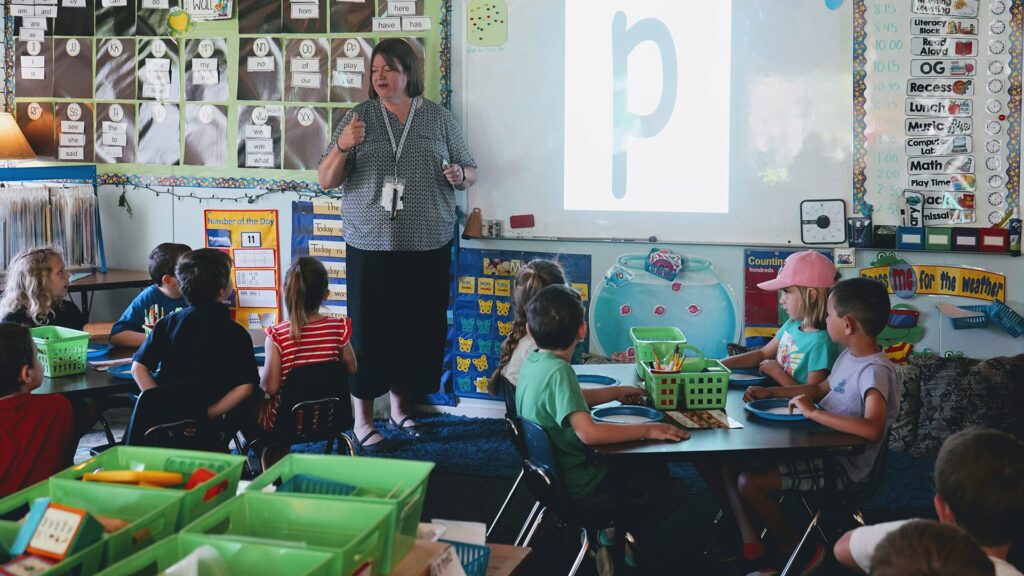
3. Ask how reading is taught at your child’s school.
Research says 95% of students can learn to read with structured literacy methods. Yet, many schools don’t use a direct and systematic approach. Some rely on popular but flawed strategies debunked decades ago by cognitive scientists, such as asking students to guess words based on the first letter and pictures or memorizing long lists of sight words.
You can learn more about this approach, known as Balanced Literacy, in At a Loss for Words and Sold a Story, two groundbreaking reports by American Public Media investigative journalist Emily Hanford.
To help the greatest number of students read successfully, the research clearly shows that instruction must be explicit, systematic, and cumulative, building on prior learning. To become fluent readers, students need to learn the mechanics of reading and be able to notice, think about, and work with the sounds in words (phonemic awareness). They need to be taught the structure of the English language: syllable types, spelling patterns, and the meaningful parts of words (prefixes, suffixes, and roots). This TEDx talk by a seventh-grade language arts teacher covers the basics.
Learn how they approach reading and writing instruction at your school(s), and if you have questions about their teaching methods, contact your child’s teacher, principal, or district superintendent and ask for more information or suggest structured literacy resources listed in this article. Attend a school board meeting or send a letter to the school board. Contact your local chapter of a literacy advocacy group, like the International Dyslexia Association (IDA), which promotes evidence-based instruction and offers resources for teachers and parents. Read up on research-based strategies, lessons, and activities through sites like Reading Rockets, a nonprofit multimedia organization run by Washington, D.C.’s public television station.
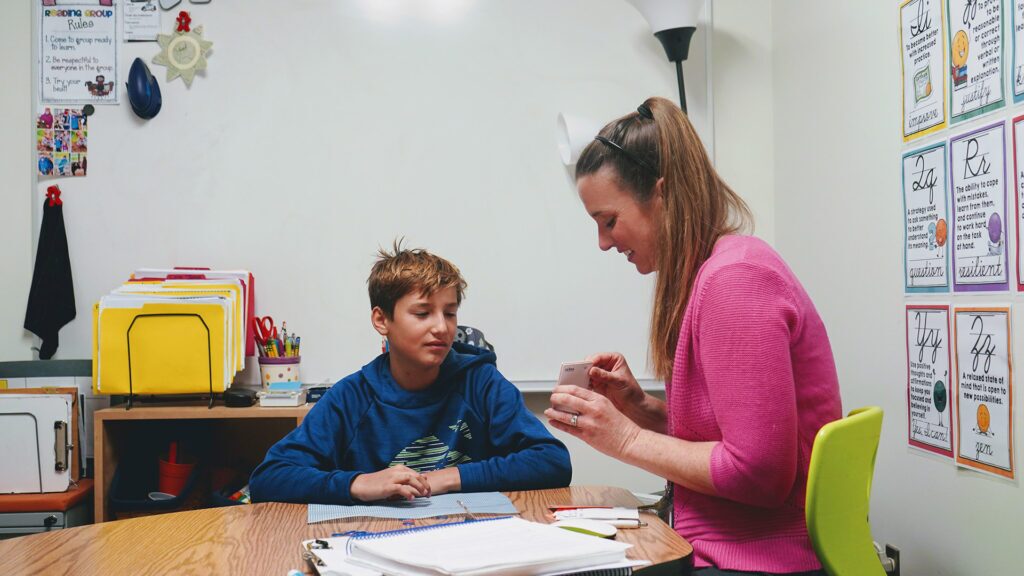
4. Know what to look out for.
In the earliest grades, signs of reading struggles include:
- having a limited vocabulary compared to children the same age;
- having difficulty with rhyming and playing with syllables in words;
- having trouble making connections between letters and sounds or remembering the alphabet;
- confusing letters that look alike or have similar sounds;
- having difficulty sounding out words or recognizing familiar sight words.
In later grades, many struggling readers continue to guess at words they can’t yet decode. They may misread “diplomatic” as “diploma” or “density” as “destiny.” Misreading words derails their ability to understand what they’re reading. These students may be slow to finish or try to avoid tasks involving reading and they may struggle with spelling and writing. If your child doesn’t enjoy reading, it may be because their ability to sound out words accurately and effortlessly is still developing.
It helps to know the risk factors for reading troubles, including having a family history of reading difficulties, early hearing and language impairments (such as ear infections and being late to speak), and limited abilities with spoken English. No single factor can predict future trouble, but watching for early reading struggles is critical. Many parents hear reassurance about “catching up eventually,” but without direct help from a skilled reading teacher, too many never do.
The ability to learn how to read and write isn’t related to intelligence. Many struggling readers are brilliant, which makes the power of reading even more important to their future! If your child struggles to crack the code of print, it doesn’t mean they’re unmotivated. Witnessing a child finally make the connections between sounds and words in print is truly eye-opening. With effective teaching approaches and the right support, students can overcome reading difficulties and go on to read, write, learn, and thrive.