Skip to content
  • Skip to primary navigation
  • Skip to main content
Stern Center for Language and Learning logo

Stern Center for Language and Learning

Life-changing learning for all

  • Client Login
  • Careers
  • Contact
  • Donate
  • For Learners and Families
        • Tutoring Services
          • Reading, Writing, and Math Tutoring
          • Learning Disability Support
          • Adult Learners
          • Summer Learning
        • Social Emotional Learning
          • Speech Therapy
          • Social Thinking
          • Autism Services
          • Social Learning Summer Programs
        • Evaluations
        • Reading Readiness Check-Up
        • Student Stories
        • Financial Assistance
        • Academic Calendar
        • News & Resources
  • For Teachers
        • Courses, Coaching, & Workshops
          • Structured Literacy Coaching for Teachers
          • Orton-Gillingham Training
          • Wilson Language Training®
          • Social-Emotional Learning Courses
          • Assessment and Evaluation Courses
          • MindPlay Comprehensive Reading Course
        • Hoehl Institute for Professional Learning
          • Reducing Costs for Teachers
          • Teacher Impact Stories
          • Resources & Newsletter
  • For Schools
        • Programs and Support for Schools and Districts
          • Structured Literacy Training and Coaching
          • Orton-Gillingham for Schools
          • Wilson® Reading Programs
          • Social-Emotional Learning for Schools
          • Reducing Costs for Professional Development
          • School Impact Stories
  • About Us
        • About
          • Our Team
          • Board of Directors
          • News & Annual Reports
          • Careers
          • Contact Us
        • Ways to Give

Phonological Awareness

January 11, 2023

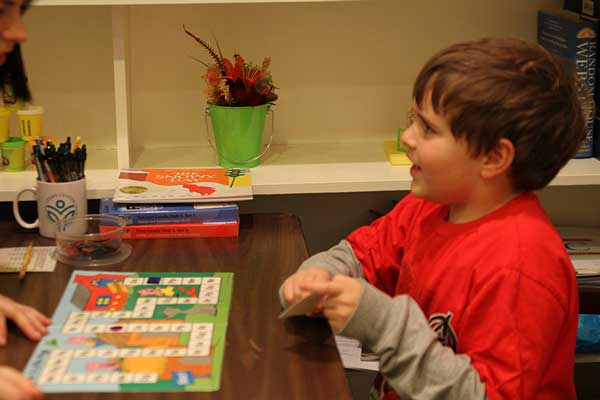
Young boy looking at teacher

Phonological awareness means you understand that words are made up of smaller parts, like syllables, onset-rime, and phonemes.

Playing with the parts of words can build this critical literacy skill. Here are some ways to introduce phonological awareness—and have some fun!

Syllables

There is one syllable in ‘dog,’ two in ‘water,’ and three in ‘musical.’ Becoming aware of syllables helps us learn new vocabulary, sound out words, and spell.

Guess my word

Have children practice putting word parts together. Tell them you are going to the “li…brar…y.”

Talk like a robot

Talk… ing… in… a… mon… o… tone… helps… kids… fo… cus… on… syl… la… bles.

You tap my back, I’ll tap yours

Tell children that you are going to tap out the name of someone in the family on their backs. See if they can guess whose name it is.

Clap it out

Have children clap out the beats in their names (three claps for Sa-man-tha, two for Pe-ter). Or jump, karate chop, rubber stamp, or lay out objects (like rocks or raisins) for each beat in a word. Whose name is the longest in the family? The shortest?

Sing!

Music makes us more aware of syllables: “Hick…or…y Dick…or…y Dock.”


Phonemes (sounds)

The ability to think about individual sounds in words is one of the strongest indicators of future reading success.

Look for books and songs with alliteration

Saying sentences such as “Sammy snake slithered south” is super for separating single sounds.

What if the whole world started with my sound?

My name, Daddy, starts with the /d/ sound. What if everything started with that sound? Your name would be Doseph! We would be sitting in the ditchen…” …Get the didea?

(Don’t) finish what you start

Having soup for lunch? Tell children, “Today we’re having /s/…” If they can’t figure it out, keep adding one more sound until they get it – /s/…/oo/…/p/.

Sing!

Songs provide great opportunities to play with speech sounds. Single sounds get repeated (think of David Bowie’s “ch…ch…ch…ch… changes!” or stretched out like Carly Simon’s “anticipaaaaaaaaaation”). So even if you can’t carry a tune, go ahead and break out in song when the spirit moves you!


Rhyming

Knowing that words sound alike and making our own rhymes help us manipulate sounds, learn new words to read, and spell.

“I Spy” with a twist

Play “I Spy” with children by giving a rhyme as a hint: “I spy something that rhymes with _.”

Nicknames

Make up silly terms of endearment for each other!

Read lots of rhyming books!

Songs, poems, and stories that rhyme are easy to memorize and help train little ears in rhythm and rhyme.

Don’t forget the classics! Nursery rhymes, playground chants, lullabyes, and Dr. Seuss books endure because they are so effective. Plus, they link us to our past and to each other.

Sing!

Most lyrics rhyme. Find songs you and your child love. Make up your own.

“Daddy-addy-badaddy”. “Tessie Tutu. I love you too!” Michael, Michael Motorcycle!”


Filed Under: For Learners, For Teachers, Parenting Resources, Reading Support, Structured Literacy

For Learners
  • Tutoring Services
  • Evaluations
  • Social Learning & Speech Therapy
For Teachers
  • Courses & Workshops
  • Structured Literacy Coaching & Teacher
  • Orton-Gillingham Training
  • Wilson Language Training®
  • Newsletter
For Schools
  • Structured Literacy Coaching & Teachers
  • Orton-Gillingham for Schools
  • School Support
About Us
  • Mission & Values
  • News & Resources
  • Giving
  • Careers
  • Contact Us
  • Media Center
  • Privacy Policy
Connect with Us
  • Facebook
  • Instagram
  • LinkedIn
  • YouTube
  • PL Newsletter
Hearts Icon

This website is made possible thanks to
the generous support of Deborah Schapiro & Louis Polish and Margie L. & Peter Stern

Stern Center

Because all great minds don’t think alike.

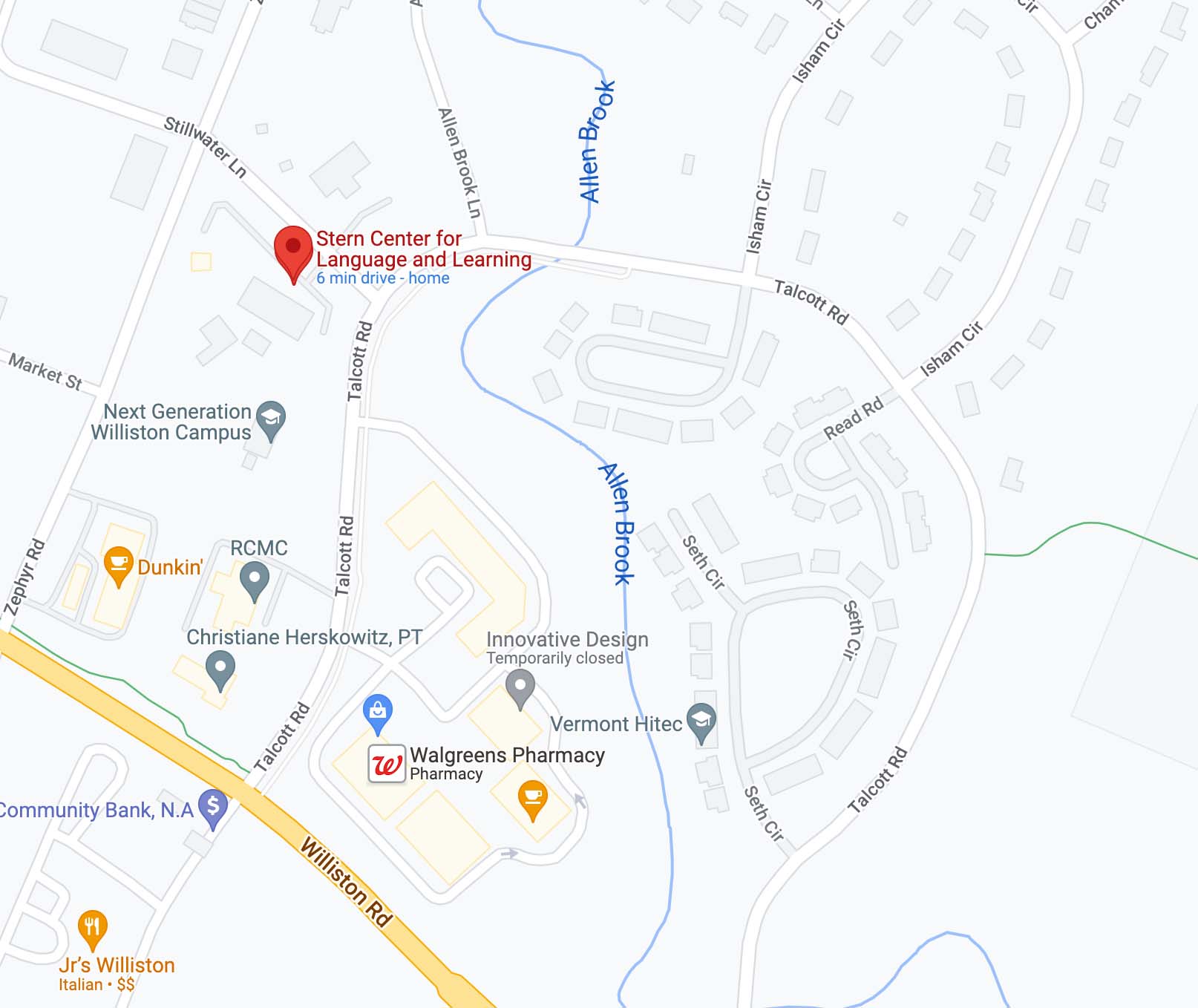
Map of Stern Stern Center for Language and Learning
Click to enlarge

Stern Center for Language and Learning

183 Talcott Rd #101
Williston, VT 05495
Phone: 802-878-2332
Fax: 802-878-0230
EIN:  222485793

  • Facebook
  • Instagram
  • LinkedIn
  • YouTube
Contact Us

Copyright © 2026 Stern Center for Language and Learning
Website by Stride Creative Group